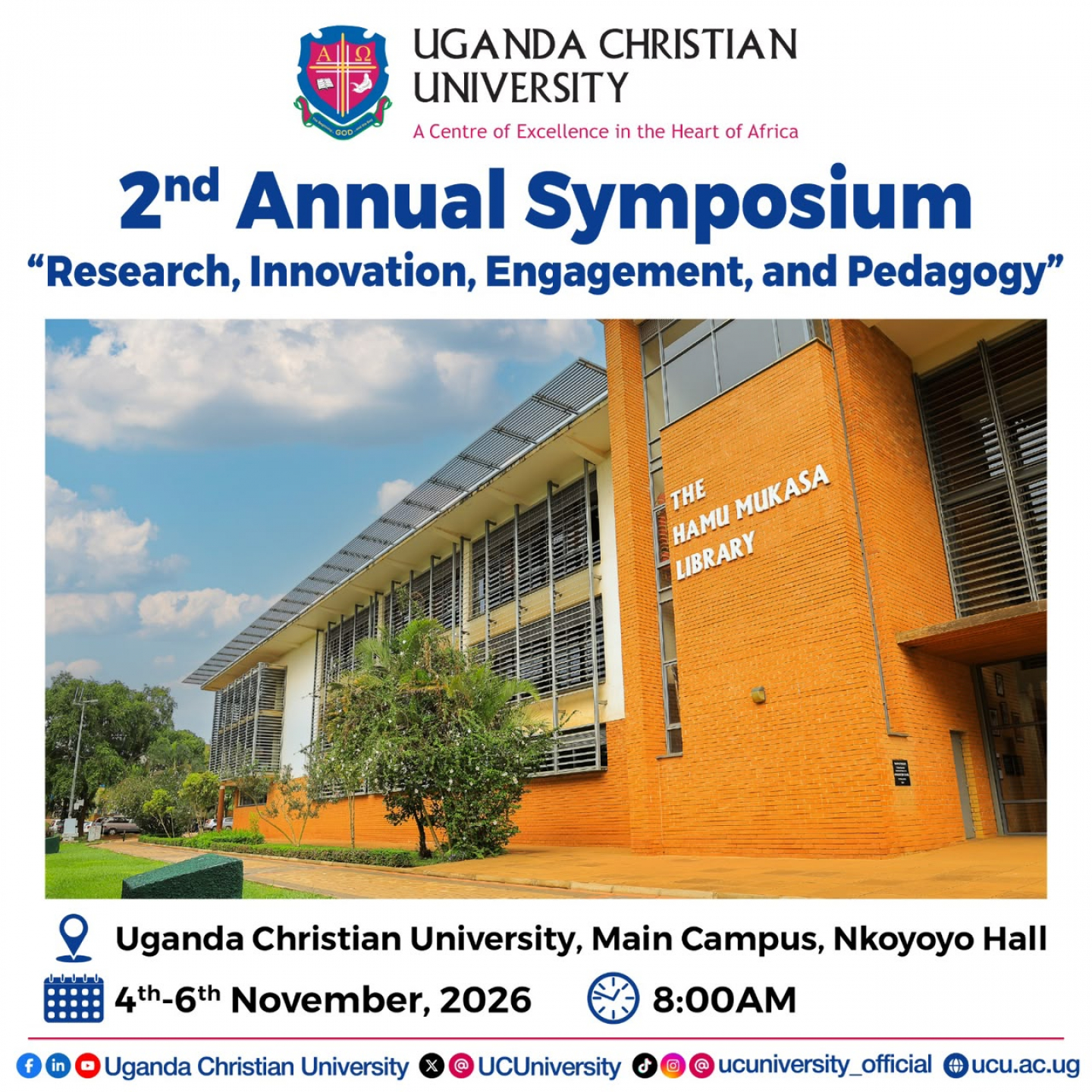
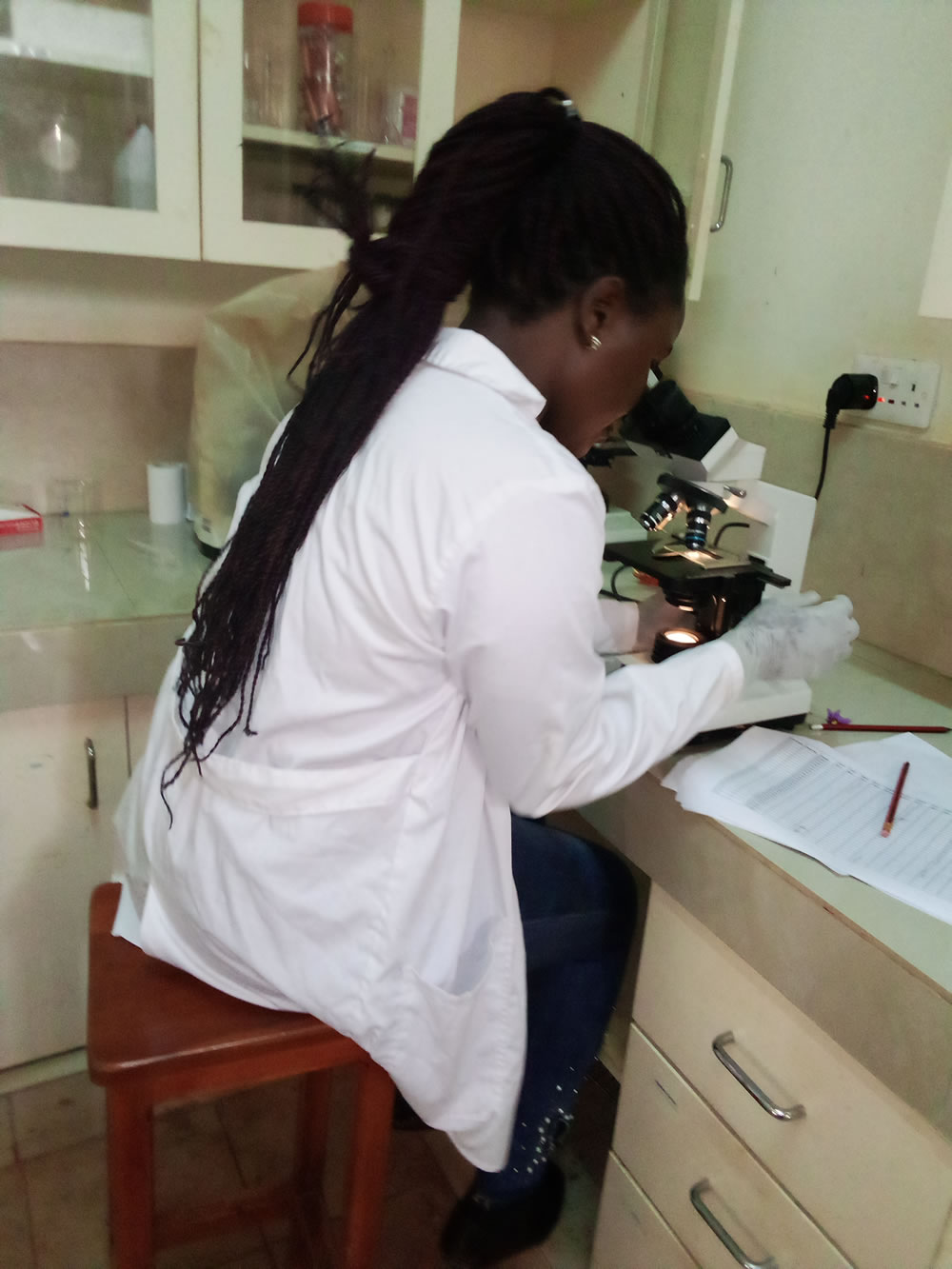
The 2nd Uganda Christian University Annual Research Symposium on under the Theme “Research, Innovation, Pedagogy/Teaching, and Community engagement.”
This symposium aims to foster a dialogue on research, innovation, engagement, and pedagogy toward societal transformation. The continent faces escalating challenges including prolonged droughts, devastating floods, rising sea levels, and landscape changes that threaten food security, water availability, and livelihoods, giving African scholars space to exchange knowledge and strengthen their skills and networks.
Therefore, this symposium seeks to create a transdisciplinary platform for capacity building and collaborative problem-solving focused on Africa's unique challenges.
Key Themes
Health and well-being: Health and well‑being refer to a complete state of physical, mental, and social wellness, as defined by the World Health Organization, and not merely the absence of disease. Examples include, but are not limited to, managing high blood pressure and diabetes; nutrition for longevity; mental health; adolescent, maternal and children health; health services access equity; social networks; preventive care; and disaster risk reduction.
Business, trade, law, and economic development: Business, trade, and economic policies of a nation guide regulatory institutions in guiding trade with other nations. Examples include, but are not limited to, entrepreneurship, from project to a business; intellectual property; business-enabling policies; economic stimulation; climate finance; and general government role.
Food, water and energy value-chains: The interconnections and interdependencies between food, water, and energy resources are central to sustainable development. These three systems
are deeply intertwined, where actions in one domain frequently impact the others. Examples include, but are not limited to, vulnerability of these value-chains to climate change; building resilience among smallholder farmers and their urban counterparts; pressures from migration and refugees; and resilient cities.
AI, Technology, innovation, and sustainable communities: The question is no longer whether the continent is ready for artificial intelligence, but what it will do with it. Examples include, but are not limited to, big data science; cybersecurity; foundations being laid across energy, infrastructure, business, and policy, for an AI economy shaped by African priorities; technological solutions to society grand challenges; and education and capacity building.
Faith and community empowerment: Faith-based initiatives empower communities by combining spiritual guidance with practical support, advocacy, and leadership development to create lasting social and economic impact. Examples include, but are not limited to, teachings on faith to strengthening governance, environmental stewardship, and resilient communities.
Teaching, learning, and sustainable communities: Educational research that explores the intersection of teaching, learning, and sustainable communities and how education drives localized social and ecological resilience. Examples include research that examines place-based pedagogies or models that connect curriculum directly to local environmental, economic, and cultural challenges.